
While many people believe hormonal shifts are a concern only for the elderly, biological changes often begin much sooner. For men, the production of testosterone—the primary hormone responsible for various male physical and mental characteristics—usually peaks in the late teens or early 20s. As men enter their 30s, this production naturally begins to taper. Identifying the early signs of low testosterone in your 30s is crucial for maintaining long-term health, as this hormone influences everything from your metabolism to your emotional resilience.
Thank you for reading this post, don't forget to subscribe!In your early 30s, the decline is typically subtle, often estimated at about 1% per year. However, for some individuals, this drop can be more significant or occur more rapidly. Because the symptoms often overlap with the stresses of a modern career or family life, many men dismiss these changes as “just getting older.” Understanding how to spot the early signs of low testosterone allows for a more proactive approach to wellness.
Disclaimer: This article is for informational and educational purposes only. It is not a substitute for professional medical advice, diagnosis, or treatment. Always seek the advice of a physician or other qualified health provider with any questions you may have regarding a medical condition.
Understanding the Physical Early Signs of Low Testosterone

Physical changes are often the most tangible indicators that a man’s hormonal balance is shifting. In your early 30s, your body is generally at a high level of physical capability, so deviations from your normal state can be quite telling. It is important to remember that these early signs of low testosterone can vary greatly in intensity from one person to another.
- Persistent Unexplained Fatigue: This is one of the most common early signs of low testosterone. It is not the typical tiredness felt after a long day of work; rather, it is a chronic sense of exhaustion that does not resolve even after a full night of quality sleep. You may find your physical “stamina” for daily tasks significantly diminished.
- Changes in Body Composition: Testosterone plays a vital role in how the body manages fat and muscle. A noticeable increase in body fat, particularly around the abdominal area, can be an indicator. This often occurs even when there have been no significant changes to diet or exercise habits.
- Difficulty Maintaining Muscle Mass: For men in their 30s who exercise regularly, a sudden plateau or a visible loss of muscle tone despite consistent training can be one of the early signs of low testosterone. The hormone is essential for muscle protein synthesis, and lower levels make it harder for the body to repair and build tissue.
- Impact on Bone Density: While bone issues are usually associated with later life, a gradual thinning of bone mass can begin early. Men may notice more frequent joint discomfort or a slower recovery time from minor physical injuries.
Emotional and Cognitive Early Signs of Low Testosterone

The brain is rich in testosterone receptors, meaning that hormonal health is deeply intertwined with mental and emotional health. Often, the early signs of low testosterone in younger men manifest as “invisible” symptoms that affect mood and mental clarity.
The Phenomenon of “Brain Fog”
Many men in their early 30s report a lack of mental sharpness. This can manifest as difficulty concentrating on complex tasks at work, a shorter attention span, or a general feeling of being “spaced out.” When this cognitive haze becomes a recurring part of daily life, it may be among the early signs of low testosterone.
Shifts in Mood and Motivation
A decline in testosterone can lead to a noticeable shift in a man’s emotional baseline. This doesn’t always look like sadness; it often appears as increased irritability, a “short fuse,” or a lack of the competitive drive and enthusiasm that was present in their 20s. A general sense of apathy toward social activities or professional goals is frequently reported by men experiencing these hormonal changes.
Sleep Disturbances as Early Signs of Low Testosterone
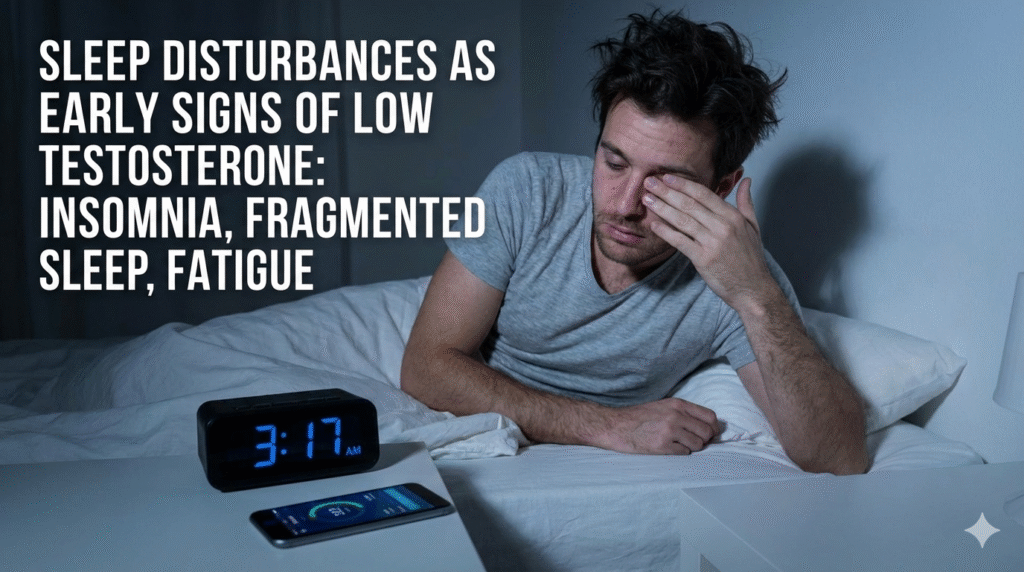
Sleep and testosterone exist in a bidirectional relationship. Low levels of the hormone can disrupt sleep, while poor sleep can further lower hormone production. Identifying these early signs of low testosterone early can help break a cycle of declining health.
- Insomnia and Restlessness: Men may find it harder to fall asleep or may wake up frequently throughout the night without an obvious cause.
- The Link to Sleep Apnea: There is a known correlation between weight gain, snoring, and low hormone levels. Obstructive sleep apnea, which prevents deep, restorative sleep, is often found in conjunction with the early signs of low testosterone, creating a compounding effect on fatigue and mood.
Why Early Signs of Low Testosterone Matter in Your 30s
Addressing these changes in your 30s is important because this decade sets the foundation for your health in middle age and beyond. Ignoring the early signs of low testosterone can lead to long-term metabolic issues, such as decreased insulin sensitivity or cardiovascular strain.
Furthermore, distinguishing between lifestyle-induced burnout and a biological deficiency is key. In your 30s, life is often at its busiest. By identifying if your symptoms are truly early signs of low testosterone, you can stop guessing and start focusing on the actual root cause of your discomfort.
Distinguishing Early Signs of Low Testosterone from Other Conditions
It is essential to understand that the symptoms of hormonal imbalance are “nonspecific.” This means that having these symptoms does not automatically confirm a hormonal issue. Many other common health problems can mimic the early signs of low testosterone.
| Potential Condition | Shared Symptoms with Low Testosterone |
| Thyroid Dysfunction | Weight gain, lethargy, and dry skin. |
| Vitamin D Deficiency | Muscle weakness, fatigue, and low mood. |
| Anemia | Extreme fatigue and lack of physical energy. |
| Chronic Stress/High Cortisol | Irritability, weight gain, and poor sleep. |
Because of these overlaps, observing early signs of low testosterone should be seen as a prompt for a comprehensive check-up rather than a final diagnosis.
How to Address Early Signs of Low Testosterone with a Professional
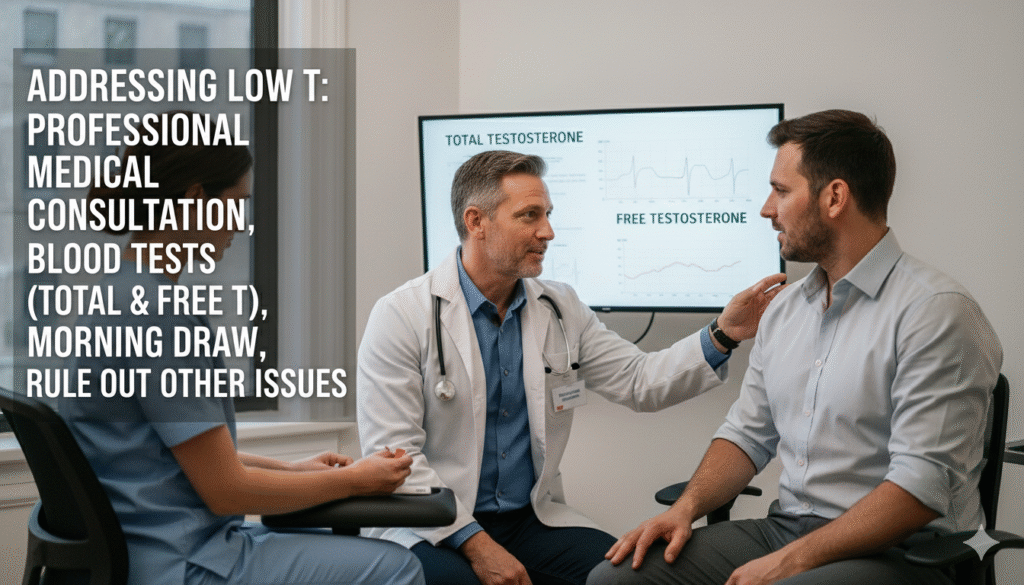
If you believe you are experiencing several early signs of low testosterone, the most responsible step is to consult a healthcare provider. Self-diagnosis through online questionnaires or the use of unverified products can lead to inaccurate conclusions.
A professional evaluation usually involves a thorough physical exam and blood tests. Because testosterone levels are highest in the morning, most doctors will schedule blood draws before 10:00 AM. They will look at “Total Testosterone” and often “Free Testosterone” (the hormone that is active and available for the body to use). A medical professional will also evaluate other health markers to ensure that your symptoms aren’t caused by another underlying issue.
Final Thoughts on Monitoring Early Signs of Low Testosterone
Identifying the early signs of low testosterone in your early 30s is a vital part of proactive self-care. While it is natural for your body to change as you transition out of your 20s, a significant shift in your energy, mood, or physical structure should not be ignored.
Every man’s body is different, and how these symptoms manifest will vary from person to person. Maintaining a balanced diet, consistent exercise, and good sleep hygiene are all fundamental for general health, but they may not be enough if a hormonal imbalance is present. If you find that healthy lifestyle choices are not resolving your symptoms, seeking a medical evaluation is the best way to gain clarity.
FOR MORE HEALTH RELATED ARTICLE CLICK HERE